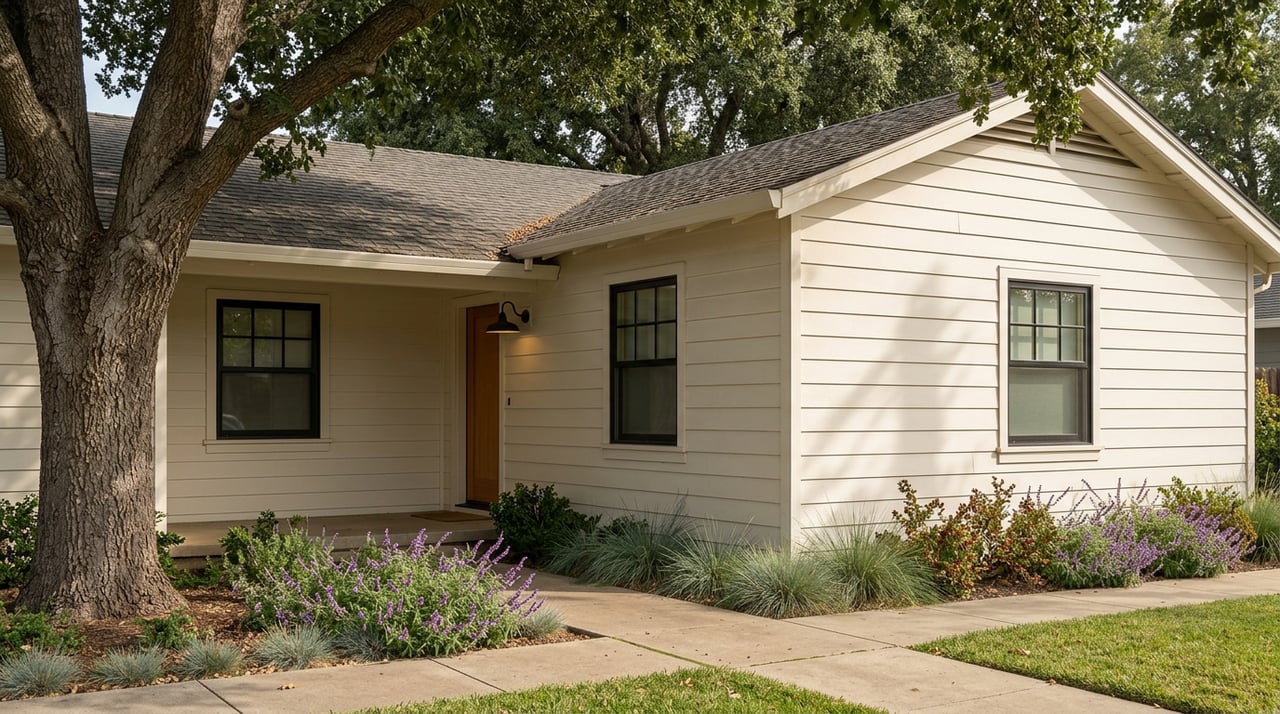
Two Roseville homes list for $700,000. One sits on a mature street in the 95661 ZIP with valley oaks in the parkway. The other is a shiny build in Westpark or Fiddyment Farm off Blue Oaks Boulevard. Same price on the portal. Same square footage on the flyer. The monthly payment on the second one can run roughly $330 higher, every month, for two to three decades.
That gap is not the mortgage. It is the Community Facilities District special tax, known locally as Mello-Roos, and it is the single most important number a Roseville buyer never sees on Zillow. This post is about how to price it in before you write an offer, not after.
The friction that only surfaces at closing
The Mello-Roos line item shows up on the preliminary title report and the property tax bill, not the MLS listing. Buyers who tour a Westpark home on a Saturday, love it, and write on Sunday routinely learn the true carrying cost on Tuesday when their lender re-runs the debt-to-income ratio using the full tax bill instead of the 1% Prop 13 baseline. At that point the choice is to bring more cash, drop the offer price, or walk.
The gap is real because the funding mechanism is real. California's Proposition 13 caps the general levy at 1% of assessed value and anchors that value to the purchase price, which is exactly why cities cannot raise general taxes on older neighborhoods to pay for new roads, schools, fire stations, and parks in the master-planned tracts on the west side of town. Instead, the developer forms a CFD under the Mello-Roos Community Facilities Act of 1982, the city sells bonds against future special taxes, and the buyers of those new homes carry the debt on their annual tax bill. The city's current framework was updated under its Goals and Policies Concerning the Use of Mello-Roos, effective April 3, 2024, and the districts are administered by Willdan Financial Services.
Here is what the same purchase price looks like on the two sides of town, using the working examples circulating in local property-tax explainers this year:
| Line item | East / Central Roseville (95661) | West Roseville (95747, new build) |
|---|---|---|
| Purchase price | $700,000 | $700,000 |
| Prop 13 base levy (1%) | ~$7,000 | ~$7,000 |
| Voter-approved bonds | Modest | Modest |
| Mello-Roos CFD special tax | Often under $500 | ~$4,000 |
| Approx. annual delta | — | +$3,500 |
Spread across a 30-year hold, that delta is roughly $105,000 in after-tax dollars, not counting annual escalators built into most CFD rate-and-method schedules.
Where the tax actually lives on the map
The geography is not random. Anything platted before the early 2000s is largely clear of heavy CFD burden. Anything built into a specific plan area on the west and northwest edge of the city is inside one. Named districts a buyer should expect to see on a title report include:
- Amoruso Ranch CFD 2 (west of Fiddyment Road)
- Creekview CFD 2
- Crocker Ranch CFD 2
- Villages at Sierra Vista CFD 1
- Northeast Roseville CFD 1
- The Fountains CFD 1 (commercial, worth knowing if you're eyeing a mixed-use investment)
- CFD 3 Municipal Services (a broader services district with its own annexation activity)
If the address is inside one of these, the special tax is not negotiable at the transaction. It runs with the parcel until the bonds are paid off, and the rate can be adjusted annually under the district's rate and method. The city's Special Taxes & Assessments page links every district's boundary map, hearing report, and formation resolution, and the annual maintenance cost schedule was recalibrated under Resolution 25-087.
What the June 2026 market data means once you back the tax out
The headline numbers from this summer read balanced. Movoto put the June 2026 Roseville median list at $687,000 with a median 65 days on market. Zillow's May 2026 average value came in at $658,294 and homes went to pending in roughly 15 days when priced correctly. Houzeo's early-2026 read had the sale-to-list ratio at 98.67% with about 2.1 months of supply, which is neutral territory: neither side has real leverage.
Read that through the tax lens and a different story appears. West Roseville and East Roseville sticker prices are within about $20,000 of each other in the $650,000 to $670,000 band, but the monthly payment is not. A buyer approved for a $700,000 purchase in East Roseville is often approved for something closer to $650,000 in Westpark once the lender adds the CFD to the escrowed tax figure. That is why identical-looking search results produce very different offer outcomes, and why some Westpark listings sit past that 65-day median while comparable East Roseville homes trade in under 30. The market is not soft on the west side. It is repricing the tax.
New construction adds a second wrinkle. Base prices in the mid-$600,000s rarely close in the mid-$600,000s. Lot premiums, structural options, flooring, and landscape allowances routinely push a "reasonably priced" west-side build past $800,000 by the time you get the keys, which raises the Prop 13 base assessment as well. The CFD does not shrink to compensate.
The offset almost nobody prices in
There is a legitimate counterweight. Roseville owns and operates its own electric utility, Roseville Electric, and residential bills often run meaningfully below PG&E service in Sacramento and the unincorporated county. For an all-electric or heat-pump household in a newer, tighter west-side build, the utility savings can recover several hundred dollars a month of the CFD delta. For a 1970s East Roseville home with older HVAC and single-pane glass, they may not.
The honest version of the east-versus-west question is not "which side has lower taxes." It is "which side has lower total cost of ownership for the way I actually live." That calculation is different for a remote worker running two monitors and a heat pump than it is for a couple who leaves at 7 a.m. and comes home at 7 p.m.
How to price the gap before you write
Four steps that take about an hour and save the surprise at closing:
- Pull the APN from the listing or the Placer County Assessor site.
- Run the APN through Placer County's tax lookup to see every levy on the current bill, not just the 1% base. The CFD line items are itemized. Willdan Financial Services at 1-800-755-6864 will confirm the district and the current rate on request.
- Ask your lender to re-quote PITI using the full tax bill, not an estimate based on purchase price times 1.1%. On a west-side home the correct figure is usually closer to 1.6% to 1.8% of purchase price once CFDs and voter bonds are included.
- Ask the listing agent for the district's rate and method if the home is a resale, or the builder's tax disclosure if it is new. Both documents show the annual escalator and the bond payoff schedule.
If the numbers still work, buy with confidence. If they do not, the East Roseville, Central Roseville, and Old Roseville submarkets are usually one weekend of touring away, at comparable sticker prices and materially lower carrying costs.
Questions that come up in a Roseville buyer consultation
Do Mello-Roos taxes ever go away? Yes, when the underlying bonds are paid off. Payoff dates are specific to each district and appear in the official statement filed at issuance. Some Roseville bonds have optional redemption dates in the late 2020s and 2030s. A buyer should not assume the tax disappears on any particular date without reading the district's fiscal agent agreement.
Can I pay off my share of the Mello-Roos at closing? Sometimes. A subset of districts allows prepayment under a formula in the rate and method. The prepayment amount is usually a large lump sum and rarely pencils out against a 30-year hold, but it can matter for a seller trying to make a listing more competitive.
Is a west-side home a worse investment because of the tax? Not automatically. Newer construction, newer schools, and newer parks are what the tax funds, and buyers relocating from higher-cost California markets often value those amenities enough to pay the delta willingly. The mistake is not choosing west over east. The mistake is choosing without pricing the tax.
Does the tax affect VA or FHA qualification? It affects debt-to-income the same way property tax does, because the lender escrows it. VA and FHA buyers on tight ratios feel the CFD more than conventional buyers with room to spare, which is why the pre-approval letter needs to reflect the specific address, not a generic Roseville estimate.
If you are weighing an East Roseville resale against a Westpark or Fiddyment Farm build, or trying to figure out which side of town your pre-approval actually reaches, that is exactly the conversation to have before you tour, not after. Paul Galindo will walk the tax bill, the rate and method, and the total monthly payment with you side by side, in English or Spanish, so the number on the offer is the number you can live with.